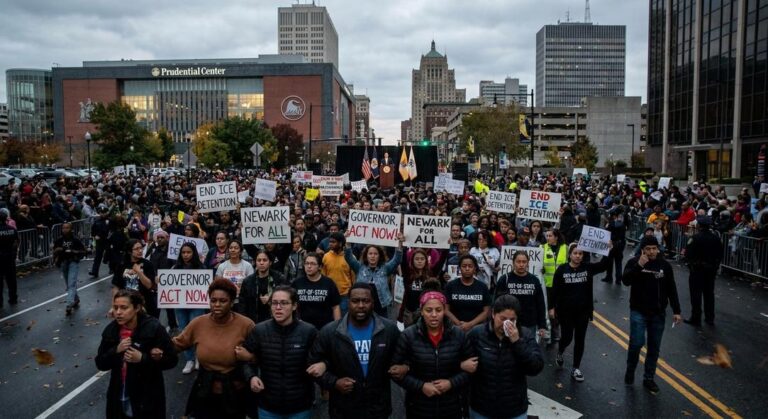



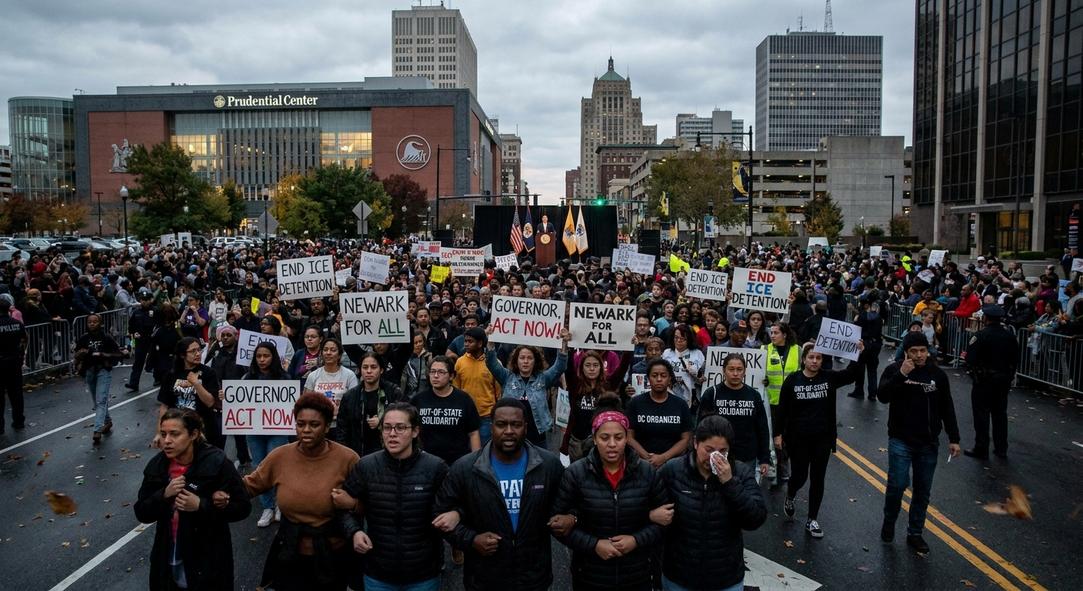
New Jersey Governor Blames Out-of-State Agitators for Newark ICE Detention Protests 🚨🗽
In a modern-day twist on the classic “not-in-my-backyard” scenario, Governor Phil Murphy attributed the volatile climate around the Newark ICE detention protests to the meddling of extraterritorial disruptors. Historically speaking, external fingers pointing blame inwards is not a new tale; it echoes the time-honored tradition of attributing one’s thorny dilemmas to outsiders.
As the governor stood at the podium, the eternal balancing act of political spin and objective truth unfolded. Could it be, one might ask with a raised eyebrow, that outsiders alone wield so much power over the local masses, or are they the convenient caricatures made famous by those in power? With shades of dramatic irony, the narrative drew attention to the geographic origin of protestors while skillfully diverting from inherent systemic issues.
The Protest Dynamics 📢
On the surface, protests against ICE detention in Newark have seemingly intensified, with images of clamorous crowds and evocative chants stirring up the dust of civil unrest. But what lies beneath this combustible surface? It’s a microcosm of the broader immigration debate that pits law and order against humanitarian ideals, striking antitheses that perennially ripple through the American conscience.
The governor’s assertion about “out-of-state agitators” acts like a lightning rod, rallying supporters and skeptics alike. Historical analogies abound: reminiscent of foreign infiltrators in Cold War narratives or the eternal specter of ‘the other’ in tales as old as time. In this latest chapter, out-of-state influencers serve as a proxy in the battle of cross-border civil discourse.
Inside, Outside, Upside-Down 🌎
As political theater unfolds, who’s more to blame, the actors or the playwright? Are these so-called “agitators” an opportunistic whirlpool pulling New Jerseyans into a national vortex, akin to how restless winds carry autumn leaves far from their rooted homes? Or, just perhaps, is there a deeper dissatisfaction embedded within the state’s own borders?
“All the world’s a stage, and all the men and women merely players; they have their exits and their entrances.”
This Shakespearean paradox serves as a reminder that while the spotlight may focus sharply on external sources, it is equally prudent to cast an eye upon the indigenous stage—one where local grievances and aspirations play significant roles, reinforcing or resisting the outside influence.
The Technicolor Canvas of Immigration Policy 🌈
A question that lingers like the smell of fresh morning coffee: how can policymakers address the nuanced intricacies of immigration if external forces are underscored more than internal dialogues? The juxtaposition of federal mandates with local community resilience calls for a symphony of policy coherence, where each note is potent enough to counterbalance dissonant chords.
- Community engagement: Elevating local narratives through inclusive policymaking.
- Transparency and dialogue: Ensuring public discourse remains a two-way street.
- Holistic reform: Crafting immigration policies that encapsulate empathy and practicality.
In the grand mosaic of social activism, both in-state residents and their alleged out-of-state counterparts weave colorful threads into the tapestry of change. Perhaps, instead of demarcating borders within activism, the efforts should pivot towards an equitable canvas where each voice counts.
As the sun sets on this scene, one is compelled to wonder: are these protests the storm or merely its herald, each raindrop signifying a sentiment divided yet united in seeking refuge from a tempestuous status quo? ⛈️