


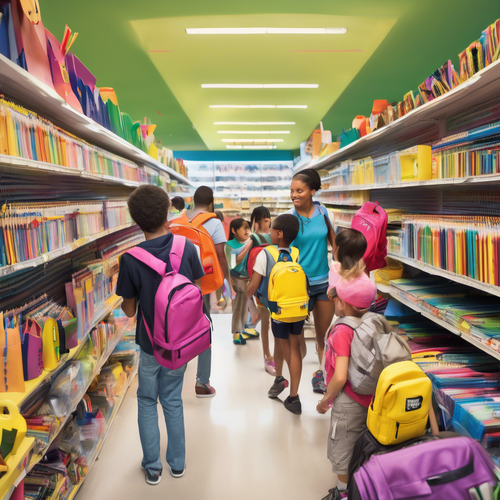
It’s a back-to-school shopping spree as families rush to beat tariffs 🛒📚
As summer wanes and the sound of school bells grows louder, families across the nation find themselves caught in a peculiar rush—a back-to-school shopping spree that seems more frenetic than ever. What drives this urgency? Ah, the specter of rising tariffs lurking like a boogeyman, prompting parents to stock up on supplies before they transform into luxury items 🤑. The irony is rich; while the school year is about preparing children for the future, the current economic climate seems to push families into a survivalist mentality.
In a world where a backpack can cost as much as a month’s worth of groceries, families are flooded with choices, all wrapped in the subtle irony of consumer freedoms curtailed by government policies. More often than not, necessities become luxuries and the clear distinction between them begins to blur. Parents search for deals, browsing aisles like miners panning for gold amidst a stream of undue financial strain.
Tariffs and Tensions: The Economic Landscape
The tariffs implemented in recent years have reshaped the landscape of consumer spending. The World Bank reports a staggering increase in prices, particularly in items like electronics and school supplies, as manufacturers pass costs down the line. What was once an innocuous back-to-school list—pens, pencils, notebooks—now resembles a shopping list fit for royalty 👑.
A key statistic: between 2018 and 2022, the average cost of school supplies has increased by approximately 25%, while household incomes have grown only marginally (US Census Bureau). The stark antithesis between rising costs and stagnant wages has left many families scrambling. How do you balance a budget that seems more like a tightrope act every year?
While the allure of discount stores and clearance sales beckons, parents may find themselves caught in a web of promotions that sometimes come with strings attached—often higher prices in disguise. What used to feel like an annual tradition has morphed into a race against the clock, and consumers have become adept at navigating this economic obstacle course.
The Rush: What Influences Spending Patterns?
Driven by the impending threat of price hikes, families are now strategizing their shopping sprees. It becomes a grotesque ballet of budgeting, where cutting corners and scouring for deals becomes a familial sport. “Grab that binder! It might be gone by next week!” is the battle cry emanating from parents who never thought they’d be wrestling over file folders and crayons 🗂️.
1. School Supply Trends and Consumer Behavior 📈
Recent surveys reveal that families with children in public schools anticipate spending an average of $864 per child on back-to-school items in 2023, a rise from previous years. This number doesn’t just encompass pencils; it includes clothes and tech gadgets that would make a computer glitch in envy 💻.
2. The Resilience of the Dollar 💵
Interestingly, this influx of spending isn’t merely a reaction to tariffs but also a reflection of consumers’ resilience. Several families adopt a ‘get-it-now’ mentality, where today’s prices are seen as a steal compared to what they might pay later. This comes with a paradox; families often overspend in the name of savings, a scenario akin to buying a lottery ticket hoping for a better future.
Consumer Strategies: Beating the Tariffs or Just Beating Yourself?
How do families navigate this minefield of inflated prices? The answer lies in strategy. Here are a few techniques parents employ:
- Bulk Buying: Parents are turning to bulk purchases in hopes of staving off price increases that loom on the horizon.
- Timing Purchases: Shopping earlier than the last-minute rush to avoid increased costs and stock shortages.
- Trade and Share: Communities have come together to share resources, turning back-to-school shopping into a community event, almost like the Summer Olympics of resource sharing.
- Digital Discounts: Utilizing apps and online tools that promise the best deals, often at the cost of time and sanity, as they weed through endless promotional emails.
While these strategies embody survival instincts, there lies an inherent irony: in their race to save, families might find themselves exhausted, financially battered yet heavily laden with items that seemed essential but may very well end up gathering dust akin to gym memberships in January.
Conclusion: What Price Does Education Carry?
As parents dash through aisles, scooping up essentials like kids are candy, one can’t help but ponder the underlying question: at what cost does education come? The disparities prompted by inflation and tariffs create an ironic landscape where families strive for the same fundamental goal—educating their children—yet find that financial preparedness might be the most significant barrier of all.
Perhaps this back-to-school season isn’t just another chapter in the academic calendar; maybe it’s a wake-up call for parents everywhere to reconsider what education means in a world increasingly intertwined with economic consequences. In the end, as each child steps through the school doors, one hopes they carry more than just supplies—they should also carry the knowledge that financial literacy is as crucial as any textbook 📖.