



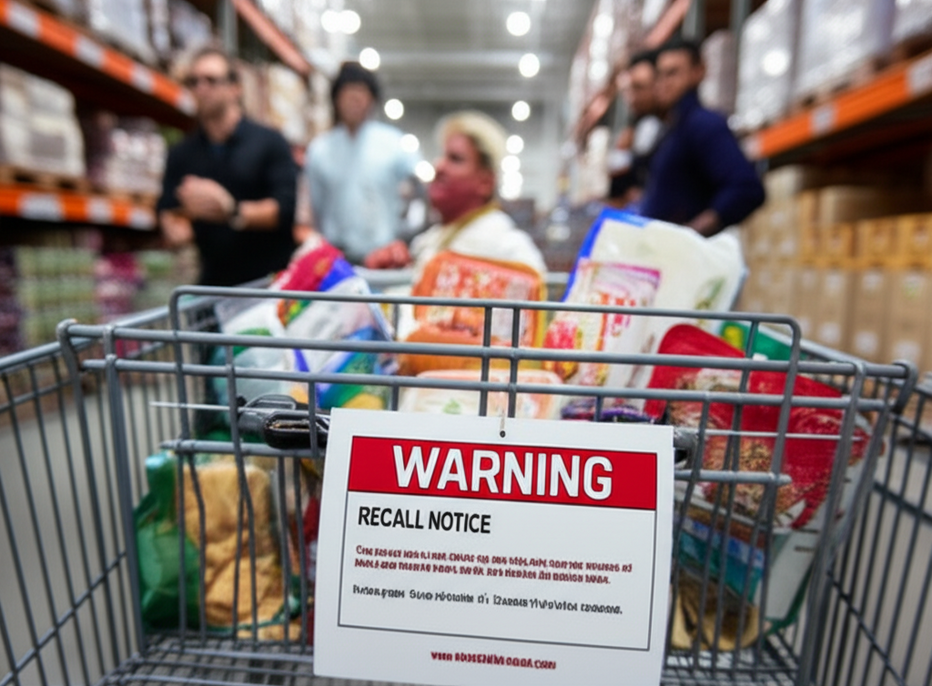
Why People Are Searching for ‘Costco Recalls’ Right Now🔍📦
Imagine walking into a temple of bulk bargains: pallets tower like monoliths, aisles stretch like labyrinths, and the scent of free samples wafts through the air—a retail wonderland where buying in bulk promises thrift yet sometimes delivers unexpected surprises. Recently, a surge in online queries for “Costco recalls” has tinted this familiar utopia with a shade of unease. Why the spike? What unseen ripples beneath the glossy warehouse shelves are stirring such concern?
The Unexpected Dance of Quality and Quantity
In a world where fast fashion outpaces conscience and convenience conquers caution, the notion of a product recall suddenly feels like an inconvenient ghost haunting our carts. Costco, a symbol of abundance — a place where a year’s supply of toilet paper can rest quietly in your trunk — seems, paradoxically, the latest stage for recall frenzy. Does volume blur vigilance, or does the assembly line of mass retail inevitably lead to a chess match where safety and profit play knight’s moves under fluorescent lights?
Historically, recalls function like a stern parent, reminding brands and consumers alike that imperfection laces even the most trusted baskets. But, the spotlight often falls hardest on giants — retailers where millions march weekly, their collective trust as fragile as a porcelain vignette balancing on a loading dock. Searching “Costco recalls” now is less a guilty admission and more of a collective alarm bell ringing amid swirling stories of malfunctioning appliances, tainted foods, or mislabelled supplements.
A Closer Look at the Recall Reality
Contrary to what viral headlines might suggest, recall notices are not tyrants but often acts of conscientious vigilance. Take, for instance, recent recalls involving Costco’s Kirkland brand products — ranging from contaminated frozen vegetables linked to listeria, to certain home appliances with wiring flaws that remind one of precarious spider webs, threatening sudden sparks rather than security.
The irony is deliciously bitter: the very scale that renders Costco a bargain haven also magnifies any glitch. Just as a single cracked tile in a vast mosaic disrupts the aesthetic harmony, one faulty product can dominate search engines and social feeds, turning the innocent act of buying in bulk into a bet with fate.
Is This a Sign of Declining Trust or Consumer Empowerment?
One could argue that the rise in recall searches reflects a heightened consumer skepticism akin to seeing the undercurrents beneath a placid lake. In today’s hyperconnected age, the watering hole of product reviews, government alerts, and social media rants transforms customers from passive recipients into vigilant gatekeepers.
Yet, this shift is also an exquisite antithesis: the trusted warehouse where we amassed goods for decades now requires us to keep our guards up. It is a shop where abundance clashes headlong with caution, where Costco’s famed treasure trove must coexist with the shadow of the recall notice. The mental image is less bulk-buying bliss, more a slow waltz with uncertainty — the shopper’s checklist now including, “Is this recalled?” alongside “Is this on sale?”
How Recalls Reflect Broader Retail and Cultural Currents
Recall culture is not merely about safety; it is a mirror reflecting the growing pains of an economy driven by rapid product cycles, globalized supply chains, and shifting regulatory landscapes. A recalled product is the retail equivalent of a sudden weather front disrupting an otherwise calm day — unexpected, jarring, but also a sign that the system is working (albeit imperfectly) to protect us.
Consider this analogy: recalls are like autumn leaves signaling change, sometimes beautiful, sometimes messy. They tell stories of complexity and interdependence as much as they warn us of hazards. With Costco’s sprawling inventory sourced globally, oversight becomes a Herculean challenge — every can of soup, every electronic gadget a tiny node in an intricate web.
Consumer Response: Vigilance Woven into Daily Life
The surge in recall-related searches exemplifies a consumer awakening, one where shoppers blend patience with paranoia. Many turn to official websites, clasping onto recall lists like a lifeline, hunting for batch numbers and expiry dates with the zeal of detectives unearthing clues.
Interestingly, this collective quest is peppered with the tension between trust and distrust. How often do we walk into that cavernous Costco, hearts lighter because of bulk savings, only to roll our eyes later upon reading about a faulty batch of dog food or a kitchen gadget with a snap that promises smoke over sizzle?
Such moments underscore the complex psychology of consumption — an oscillation between faith in institutions and the skeptical pragmatism sharpened by a thousand alerts. The question flickers: is our trust more fragile or more informed than ever?
Navigating Recall Fever: What Shoppers Can Do
- Stay Updated: Frequent the official U.S. Consumer Product Safety Commission site and Costco’s own recall page for verified information.
- Scrutinize Purchases: Take a moment to check product batch numbers & expiry dates before loading your cart.
- Be Proactive: Register products online when possible to receive direct recall notifications.
- Spread Awareness: Inform family and friends, especially those less digitally savvy, about current recalls—because knowledge isn’t just power; it’s protection.
A Reflective Pause on Modern Retail’s Complex Dance
Costco’s recall surge teaches us something larger about the times we live in — a sharp reminder that trust, like bulk inventory, is abundant yet must be handled with care.
In an era where efficiency vies with ethics, and limitless choice flirts with latent risks, the simple act of searching “Costco recalls” encapsulates society’s uneasy tango with mass consumption. Behind every click lies a story, a question, a flicker of doubt — as if the vast aisles themselves whispered, “Be careful what you stack in your life.” ⚠️🛒