


Cracker Barrel’s Digital Pivot: A Quiet Retreat from Inclusion Pages 🚪
In a world where corporate responsibility often walks hand in hand with social media scrutiny, Cracker Barrel’s recent decision to quietly delete Diversity, Equity, and Inclusion (DEI) and Pride pages from its website might appear like a strategic retreat worthy of a tactical manual. Here, an emblem of rustic Americana finds itself traveling the tumultuous waters of modern identity politics, where it seems, as the old saying goes, you can’t please everyone. Or can you? 🤷♂️
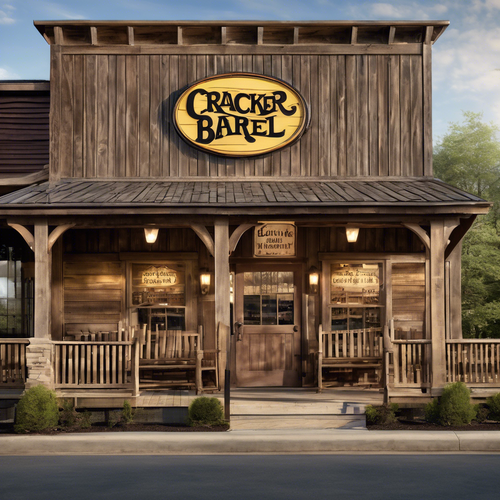
The removal of these pages followed a controversial logo change, one that sparked a deluge of disappointment among LGBTQ+ advocates while simultaneously earning applause from more traditionalist factions. In short, Cracker Barrel stubbed its toe on a proverbial hamster wheel, cranking out an image that was met not with unison, but division. The age-old dance of branding is, it would seem, alive and kicking, balancing precariously on a tightrope of consumer perception. ⚖️
The Irony of Corporate Identity
The very essence of Cracker Barrel, a chain synonymous with home-cooked comfort food and rustic charm, now finds itself mired in a Public Relations quagmire that is as perplexing as it is telling. One could suggest it’s a bit like serving fine wine at a barbecue—purring with sophistication, yet jarringly out of context. The decision to embrace DEI initiatives was hailed as progress in a world craving inclusivity. And yet, the retraction seemed to whisper—maybe that was a misstep. 🤔
What does it mean when a corporate titan opts to step back from the very principles of inclusion it once espoused? It’s akin to a painter carefully selecting their palette only to erase their strokes, leaving the canvas empty save for a hint of indecision. This dramatic pivot underscores a striking antithesis—in the quest to appeal broadly, do companies dilute their core values, or do they merely flicker to the changing whims of the marketplace?
The Reaction: A Microcosm of Memes and Murmurs
Public reaction has been swift and polarizing. Social media, that hive of instantaneous opinion and feedback, erupted with memes, critiques, and calls for reflection. A chorus of voices emerged, some heralding the withdrawal of DEI initiatives as a necessary pushback against “woke” corporatism, while others mourned the loss of a platform they believed reflected a more inclusive vision of America. Were these decisions business-savvy miscalculations or just another chapter in the ongoing saga of corporate identity? 📉
Strikingly, such moves often take on a life of their own, dragging the brand along for the ride. And in the digital age, where news cycles are measured in minutes, the speed of backlash makes navigating these waters feel like trying to dodge a barrage of cannonballs while sailing a paper boat.
Contextualizing the Shift in a Broader Landscape
The backdrop against which Cracker Barrel’s dilemma unfolds is filled with contradictions, much like a starry sky splashed with dark clouds. Businesses are increasingly expected to stand on the moral high ground, yet the grounds of public opinion are as shifting as sand dunes caught in a windstorm. With recent reports indicating that consumer advocacy for corporate accountability reaches an all-time high, it becomes debatable—will Cracker Barrel emerge from this storm with its brand identity intact, or will it find itself drifting into the murky waters of irrelevance? 🌪️
What Lies Ahead?
As Cracker Barrel fiddles with its logo, the heart of the matter boils down to a question that feels as old as time itself: can a company’s core identity remain steadfast when faced with the diverse fabric of societal values? It’s a juxtaposition worthy of contemplation. On one hand, authentic connection with consumers requires transparency and alignment with their values. On the other, taking a stand is fraught with risks, creating the sensation of walking a tightrope stretched over a chasm of public opinion. 🤹♂️
Perhaps the answer lies not in the binary “yes or no” but rather in a spectrum of understanding—acknowledging that businesses operate in an ecosystem where every decision reverberates. The future will tell if Cracker Barrel can mend the gaps created by this digital pivot and whether consumers will embrace them once again, or if the parting of ways will prove too far to bridge. ✨