

“`html
Alan Dershowitz’s Legal Odyssey: Defamation Appeal Derailed by CNN ⚖️📰
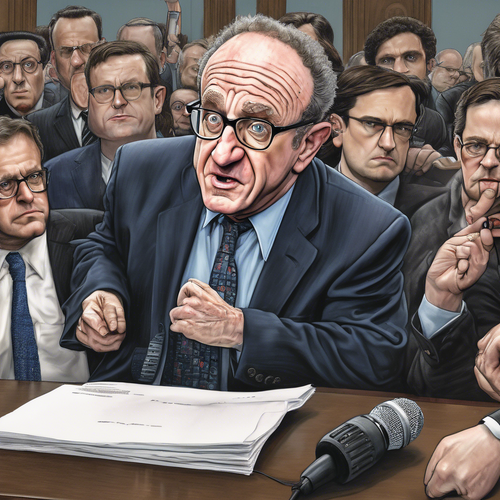
In a courtroom drama that could give John Grisham a run for his money, attorney Alan Dershowitz has witnessed his attempts to silence CNN fall flat. The legal titan, perhaps best known for his role in various high-profile cases (and his penchant for self-promotion), recently lost an appeal aimed at reversing a prior defamation ruling against him. It’s a twist that would be deliciously ironic if it weren’t so serious—and perhaps curiously fitting for a man whose career has often danced along the knife’s edge of controversial discourse.
Contextualizing the Legal Landscape
At the heart of this dispute lies a deeply woven tapestry of media ethics, free speech, and the safeguards that exist to protect public figures. In a world where accusations and assertions flow as freely as morning coffee, media outlets wield an extraordinary power that is both a privilege and a potential legal minefield. It evokes the haunting questions: should media be held to a different standard when it comes to defamation? Are words, once spoken on air, a mere brushstroke upon the canvas of public opinion or more akin to a sledgehammer to reputations?
In 2020, Dershowitz claimed that CNN disseminated false information about his involvement in the Trump impeachment proceedings, branding them defamatory. His counterattack was full of legal bravado, but the initial verdict served as a stark reminder of the stringent benchmarks required to win a defamation claim against a media behemoth.
The Irony of Outcome
Imagine this: a man celebrated for his mastery over the law finds himself ensnared in its webs, a tragicomic figure lamenting over his credibility in media representation. The irony here is palpable, akin to a lawyer getting caught in a procedural loophole of his own making. With each failed attempt to overturn the ruling, Dershowitz’s narrative transforms significantly—from that of a fierce denouncer of injustice to somebody grappling with the very demons he sought to exorcise. Such is the irony of seeking vindication in a court of law, where even the most towering legal minds can stumble.
Implications on Media Accountability
The implications of this case are profound. They echo in the chambers of every newsroom and echo through the corridors of power, as freedom of the press grapples with accountability for misinformation. As public discourse is increasingly shaped by digital platforms, the stakes mount for media outlets. If a legal heavyweight like Dershowitz falters, what does that spell for more vulnerable individuals caught in the media’s magnifying glass? Does it mean that ‘fake news’ is a term that can be wielded like a sword, or is it an alarm bell for a seismic change in how we regard journalistic integrity?
A Personal Reflection
In the grand theater of the law, we see these narratives play out, a bit like a Shakespearean tragedy, where flaws, hubris, and unforeseen consequences intertwine. It may evoke memories of college debates on free speech vs. the right to protect one’s reputation
, a debate that reverberates through our social consciousness. Like wandering minstrels, lawyers and journalists must navigate the complexities of their craft, mastering their instruments while staying vigilant against the dissonance of error.
Looking Forward: A Broader Perspective
What’s next for Dershowitz in his legal quest? It remains unclear if he will continue pursuing this uphill battle or pivot to other strategies. What is certain, however, is the legal terrain continues to evolve, reflecting a society in flux. As the lines between media and legality blur, we stand at the precipice of a new era, where the question of accountability looms larger than ever.
Ultimately, the story of Alan Dershowitz and CNN serves as a cautionary tale for those who navigate the intersection of law, media, and public perception. Perhaps it is a lesson draped in that most modern of expressions: “think before you tweet” or, indeed, before you litigate.
As the final gavel sounds in this chapter, one can only wonder: will our understanding of media responsibility evolve, just as the platforms through which we communicate continue to transform? 🤔🔎
“`