



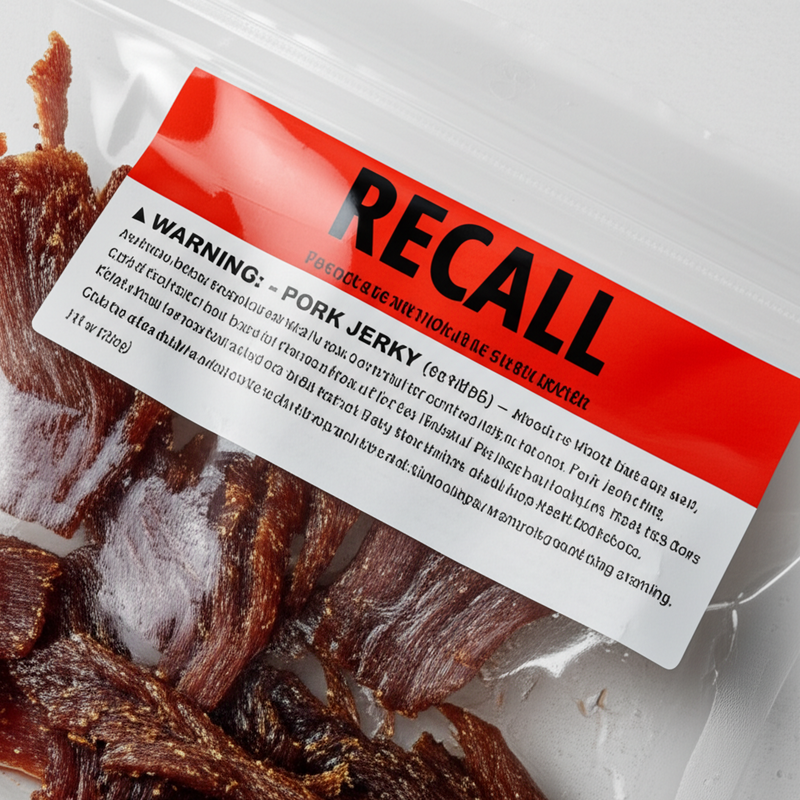
Company Recalls 2 Million Pounds of Barbecue Pork Jerky Potentially Containing Metal Wire 🚨
News of a substantial recall rarely elicits joy, but the recent announcement from [Company Name] has left many scratching their heads. A staggering two million pounds of barbecue pork jerky is being called back due to the tantalizingly terrifying possibility of metal wire contamination. It raises a question: is the era of carefree snacking dead? 🤔
As the nation indulges in summer barbecues, the irony here is rich. People relish the crunch of jerky, mining those flavors like prospectors panning for gold, only to be confronted with something potentially sharper than flavor—metal. This recall isn’t merely an awkward hiccup; it delves into the heart of food safety and consumer trust.
The Recall: What We Know So Far
The U.S. Department of Agriculture’s Food Safety and Inspection Service (FSIS) has stepped in, mandated the recall, and provided a list of potentially affected products. The jerky in question, which bore the banner of deliciousness, now comes with a label of caution. Affected consumers might soon find that the BBQ pork jerky they scooped up may contain unexpected—and unpleasant—shards of wire. It’s like throwing in a surprise ingredient at the last minute, only in reverse. 😱
But let’s not tread lightly into fear without facts. The recall affects products with various expiration dates and sizes, produced between [specific dates]. The metals escaped scrutiny during the production process, a slip that might echo through grocery aisles nationwide. In a world where dinner options should be easy and fun, food safety remains paramount, illuminating the striking antithesis between what we crave and what we risk.
The Broader Implications of Food Safety
This isn’t just another food recall; it serves as a stark reminder of the fragility of consumer confidence in the food industry. The jarring reality is that many rely on pre-packaged goods, blithely believing that all quality checks are thorough. Their unexpected juxtaposition—comfortable meals versus hazardous surprises—reveals a deeper paradox: the more we innovate food production, the more prone we become to unforeseen risks.
According to reports, the FSIS is working closely with the company to address these potential hazards. However, the incident raises numerous questions regarding oversight and accountability. What layers of quality control were insufficient? Were they too preoccupied with customer demand to ensure safety?
The Consumer Reaction and Moving Forward
Social media has bloomed with reactions—witty quips as well as genuine concerns. One user humorously noted, “Is this a snack or a DIY project?” while another lamented, “I just wanted some jerky, not a trip to the dentist!” As consumers vent their frustrations, the irony thickens; products marketed for their convenience and indulgence have now become symbols of a looming health hazard. 🦷
So, what should consumers do? It’s worth keeping an eye out for notices from the relevant authorities about recalls. Checking product labels before devouring them could very well save a trip to an unpleasant family dinner where the conversation tips toward medical mishaps instead of reminiscing about summer barbecues. Who knew that, in today’s age of information, the unsung enemy might just be the lack of vigilance? 🔍
- Check for recalls on the FSIS website.
- Examine product labels thoroughly before consumption.
- Maintain an open dialogue with retailers about product safety.
- Be aware of symptoms of food contamination.
Looking Ahead
As we navigate this latest food safety incident, one can hardly suppress the recurring notion that our palates often lead us into precarious territory. Like a barbecue pit that turns into a bonfire, we must remain vigilant about what’s on our plates. Call it the price of indulgence or the price of ignorance; either way, the onus falls not only on producers but on us as consumers to demand and safeguard quality.
Ultimately, while the barbecue pork jerky might go back to the drawing board, it serves as a crucial reminder that vigilance—whether operating machinery or producing food—often makes the difference between a tasty treat and a potential health hazard. Perhaps the most evocative takeaway is the irony of trusting what we consume and the narrative that unfolds with each morsel. 😓 💡